
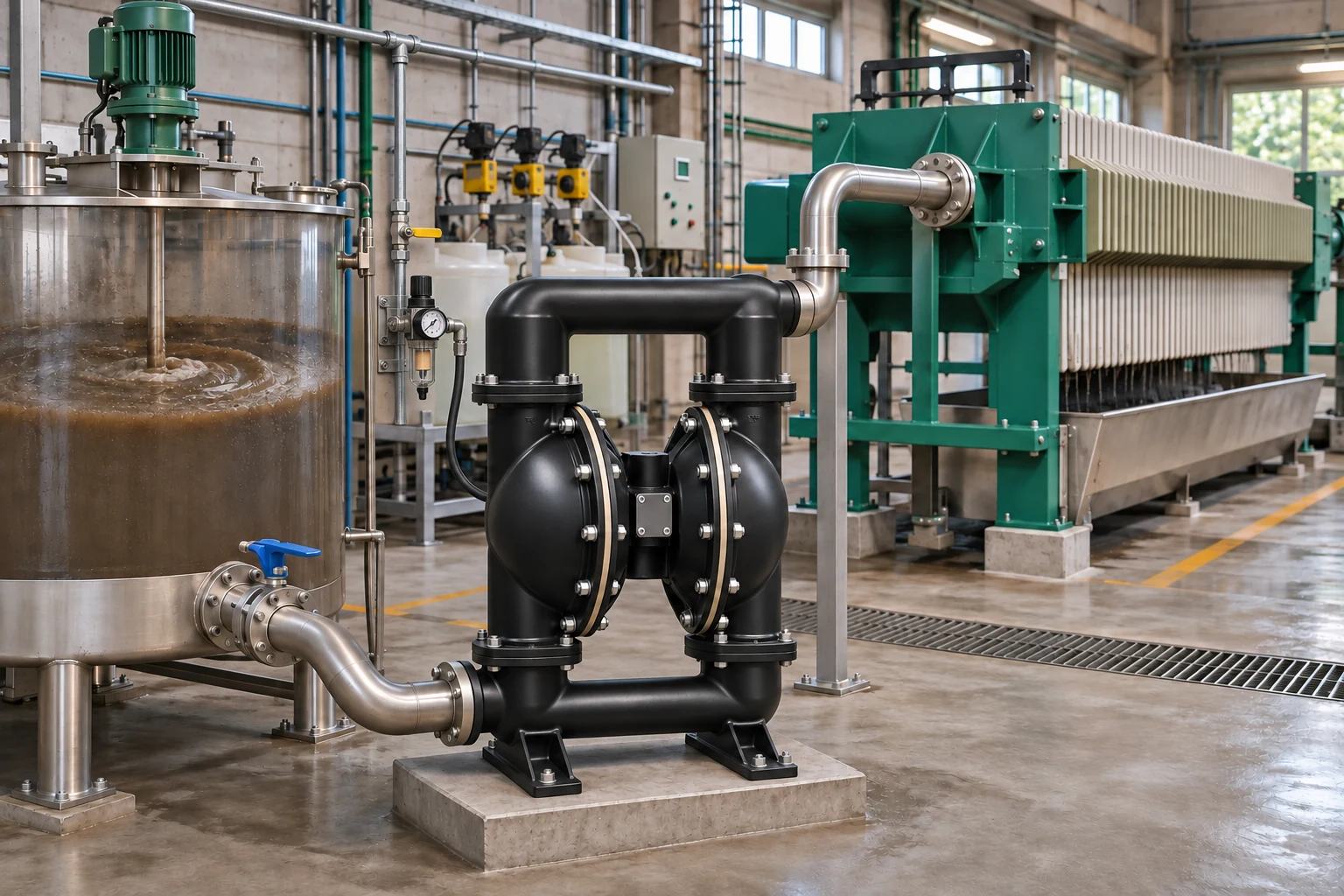
1. Verified process basis
EPA descriptions of recessed-plate and diaphragm filter presses explain that a feed pump fills the chambers and develops pressure while solids accumulate against the filter cloth. The required flow normally changes through the cycle as resistance rises. This is the process basis for the review; it is not presented as a DELEEMA customer installation.
2. Define the whole feed cycle
Record the initial fill flow, expected terminal pressure, cycle time and control method. A pump sized only for the initial low-pressure flow may behave differently near the end of the cycle. Confirm whether the press requires staged pressure, a stop signal or a maximum cycling limit.
3. Characterise the sludge
Provide solids concentration, viscosity or flow behaviour, particle size, conditioning chemicals, temperature and settling tendency. The word “sludge” is not sufficient for material selection or performance estimation. Sample variation and cleaning liquid must also be considered.
4. Screen the pump and installation
Evaluate flow at pressure, suction arrangement, solids passage, wetted materials, air availability and connection size together. Keep the suction line short and adequately sized, support the pipework and provide instruments that show actual air and liquid pressure during the cycle.
5. Pilot before making a performance claim
Sludge behaviour and press resistance are installation-specific. A controlled pilot or witnessed duty test should confirm cycle time, terminal pressure, flow decay, air demand and component wear before a final production claim is made. Record the test fluid and conditions with the result.